Print this page
Email to a friend Add to Favorites

Visit Mexico


Quality Hotels with HotelConnect

Best Rate Guarantee

no one deals like we do!


Click Here For The Wall Street Journal

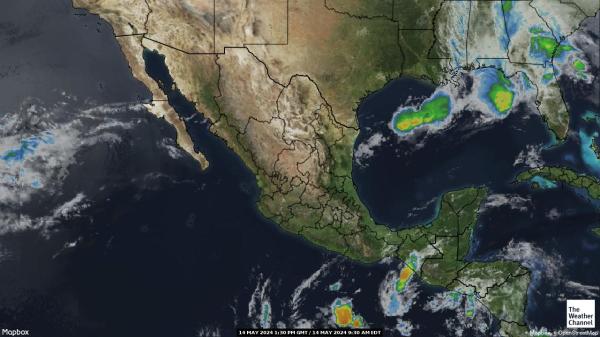
Mexico is a country of beach Resorts, colonial cities, archeological sites, and countless natural settings, lying between the United States of America to the north, and Guatemala and Belize to the southeast. Its extensive coastlines include the Gulf of Mexico and the Caribbean Sea to the east and the Pacific Ocean to the west. Mexico has nice and warm people, unique food, art and archeology, pyramids, museums, Haciendas, 6,000 miles of shores, superb architecture and cities, weather from snow mountains in the Sierras, to rainy jungles in the Southeast and desert in the Northwest, more than 50 golf courses, excellent fishing, world top destinations like Acapulco, Cancun, Cozumel, Los Cabos, Patzcuaro, among others amenities. Mexico is ranked 8th major destination for foreigner visitors, according to WTO.


Visas

  • If you are not a US citizen holding a visa for the US (including the green "waiver" visas people from Western countries get at US borders), you will have both a visa stamp in your passport and a loose immigration document (often a green card) that the US customs officer puts in your passport. When entering Mexico from the US (either by land or by plane): if you intend to come back to the US after your stay, do not try to hand the green immigration document back to US customs (they normally don't ask for it). You can enter the US multiple times during the time allocated to your visa (for Western tourists, normally 90 days), but you need to have the immigration document as well to validate the visa. If you come back from the US without that document, you will not only have to apply again for a new visa (which is on land borders as in Tijuana costly (6-20 $) and may take a whole afternoon if you happen to be in a queue with hundreds of Mexican applicants), but you will also be asked severe questions by US immigration. So keep the immigration document with you until you leave North America for good.

  • If you are a citizen of Andorra, Argentina, Australia, Austria, Belgium, Canada, Chile, Costa Rica, the Czech Republic, Denmark, Finland, France, Germany, Great Britain, Greece, Hungary, Ireland, Island, Israel, Italy, Japan, Liechtenstein, Luxembourg, Monaco, Netherlands, New Zealand, Norway, Poland, Portugal, Puerto Rico, San Marino, Singapore, Slovenia, Spain, South Korea, Sweden, Switzerland, United States of America, Uruguay or Venezuela, you don't need a visa to enter Mexico, although you must present a valid passport and fill out an immigration form for tourists and business trips, which can be obtained in travel agencies, airlines or at the point where you enter Mexico.

    The immigration officer at your point of entry into Mexico can also request that you demonstrate that you have sufficient funds and a return ticket to your country.

    If you are a citizen of any other country, you need to go to a Mexican consulate to request a visa. If you have a family member, friend or acquaintance in Mexico, he or she can do this at the INM.

    Consult the requirements or go to any of the INM delegations throughout Mexico for detailed information about requesting a visa.

  • To apply for a visa or passport, you can consult the Mexican Embassy's website at www.sre.gob.mx/delegaciones/dire.htm . You can also consult Immigration Services at www.migracion.gob.mx/principal.asp

Holidays

  • January 1st

  • February 5th: Constitution Day(1917)

  • February 24th: Flag Day

  • March 21st: Birth of Benito Juárez (1806), 2006 is bicentennial year.

  • May 1st: Labor Day.

  • May 5th: Puebla Battle (against the French army, 19th century).

  • September 16th: Independence day (from Spain)(1821).

  • November 20th: Revolution day (1910).

  • December 12th: Our Lady of Guadalupe.

  • December 25th: Christmas.


Hotels, Apartments, Cruises, Vacations in Mexico

Useful information

Currency
Bills come in denominations of 20, 50, 100, 200, 500 and 1,000 pesos. Coins are issued in denominations of five, 10, 20 and 50 cents, and one, two, five, 10 and 20 pesos (although the latter is no longer accepted in many places). The U.S. dollar is accepted at all money exchange bureaus across the country; it's also possible to exchange such currencies as the euro and the Canadian dollar.

Taxes
When leaving the country, you must pay departure and airport taxes, which cost about US$13 and US$8.50, respectively. When purchasing your airline ticket, ask if the taxes come included. (Tax fees may vary)

Leaving Tip
Generally, you should tip waiters, bellhops, skycaps (about US$1 per bag), tourist guides and valet parking attendants. In restaurants, leave 10% or 15% of the bill. Taxi drivers usually don't expect tips.

Customs
To obtain information concerning cars and other items that you are allowed to bring into the country, visit the following websites:

http://www.aduanas.sat.gob.mx/webadunet/aga.aspx?Q=r30


Telephone
Making a Phone Call
The country code when dialing to Mexico is 52 and the long distance code is 01. When calling the United States and Canada , you must first dial 001. To place other international calls, dial 00, followed by the country and city codes. In Mexico , you'll find pay telephones in most cities; some are coin-operated phones and others require prepaid cards that cost 30, 50 or 100 pesos.

Internet Access:
Mexico offers plenty of Internet cafes and public sites with connections ranging from standard dial-up to high-speed DSL.

Emergency Numbers:
Here are some important emergency phone numbers: 060 for police, 080 for the fire department and ambulances, 078 for highway emergencies, (55) 5250-0123 for tourist security, and (55) 5658-1111 for information service Locatel.


Electricity:
120V/60Hz


Time Zone: During the winter, the southern, eastern and some central region states are on Central Standard Time (GMT -6 hours). The northwest and Pacific coast states are on Mountain Standard Time (GMT -7 hours) and Baja California is on Pacific Standard Time (GMT -8 hours). Daylight savings time is applied during the summer.

Transport
By Car
Due to a government scheme in the early 90's to create infrastructure, the best roads are toll roads. Toll roads can be relatively costly, 400-800 pesos is not uncommon on longer trips, but are much faster and better maintained. Buses generally travel by toll roads (and the toll is obviously included in the ticket price).

When travelling on Mexican roads, especially near the borders with the United States and Guatemala, one will probably encounter several checkpoints operated by the Mexican Army searching for illegal weapons and drugs. If you are coming from the United States, you may not be used to this, and it can be intimidating. However, these are rarely a problem for honest people. Simply do what the soldiers tell you to do, and treat them with respect. The best way to show respect when entering a checkpoint is to turn your music down, lift sunglasses from your face, and be prepared to roll your window down. They should treat you with respect as well, and they usually do.

International driver's licenses are recognized and recommended. Speeding tickets are common, and to ensure your presence at the hearing, the officer may choose to keep your license. He is within his rights to do so.

By air

Domestic air travel will be via a Mexican airline or private plane, as international airlines are prohibited from operating domestic flights.

Mexicana and AeroMexico are the two main carriers along with Aviacsa and Aerolineas Aztecas. Many discount airlines launched in late 2005 and the number keeps growing. Due to a lack of space at Mexico City's main airport, several of these new carriers are based in nearby Toluca, including Interjet and Volaris. Avolar mainly flies from Tijuana and Alma de Mexico from Guadalajara.

By bus

If travelling by bus, be sure to take the express buses, if available (they are called directo ). Other buses often stop at many smaller stations along the way, making the trip a lot longer. If you have experience with Greyhound buses in the US, you're in for a pleasant surprise. Book direct travel within Mexico on ejecutivo buses departing in the evening. You'll be able to sleep on luxury buses with as few as 18 seats. Some even have complimentary beer. With the advent of NAFTA, some bus companies are now offering service from US cities.

On the other side if travelling within a city you won't find a pleasant surprise. You will find one of the most chaotic public transport systems full of the popular "peseros". "Peseros" are small buses with varying color codes depending on the city you are. Usually the route taken is written in a cardboard attached to the windshield. Unlike many countries you can make a stop wherever you want but it's not recommended as you put in danger your safety and the safety of the nearby drivers who can get suddenly stopped. Try to make stops at the assigned points; you will rarely find a stop button in a pesero, just shout the word "bajan" for it to stop. Fares are cheap and vary from 2 to 7 pesos aproximately.

By thumb

Hitchhiking possibilities vary according to region. Mexican culture is often accepting of hitchhiking and it's a common practice among Mexican youngsters going to the beach in Easter vacations, though in some cases a money contribution is expected for gas because of its relatively high prices. You should make it clear that you have no money to offer before accepting the ride, if this is the case. Hitchhiking is considered fairly safe and easy in the Yucatan Peninsula . The region near Mexico City should be more difficult to obtain a free hitchhike, as private cars don't stop to help hitchhickers for security reasons and buses that do stop expect a fee for the ride.


Health

Mexico is so notorious for traveler's diarrhea that it is often called "Montezuma's Revenge". That means that if you are not used to spicy and hot food don't try to match the eating quantities of the local people who are obviously more adapted to it.

Drinking water out of the tap is generally a bad idea, but some urban areas are okay. Check with locals, but treat their reassurances with some skepticism, as they may be resistant to local strains of bacteria that your body is not prepared for. Even safe, purified water could pass through clay or lead pipes before reaching your sink. Mexico is one of the main bottled water consumers in the world so its recommended to buy some whenever it's possible.

Likewise, avoid raw vegetables and fruits unless they have been washed in an iodine or other disinfecting solution. In addition to diseases that could be picked up from the soil where they are grown, some of the pesticides in use in Mexico are considered unsafe. If your body is not used to these chemicals, will rebel.

If you start to show symptoms of food poisoning, visit a doctor as soon as possible. There is medicine available that will counter the bacteria and save you much suffering.

Medicine in urban areas is highly developed, but it's recommended going to private hospitals.


Safety

TIn most of the cities, location is very important, security change from place to place, areas close to downtown (centro) are safer to walk at night specialy on the "Plaza", "Zocalo" o "Jardin" (main square) and areas nearby, stay on populated areas, avoid poor living conditions neighborhood specialy at night, dont walk there at anytime if you are alone.

Some Mexican border towns could be dangerous, for someone who is unaware, especially at night. In contrast, Mexican northern -non-border- cities are very safe; such as Monterrey, Saltillo, Chihuahua, etc.

Never drive above the speed limit or run stop signs/red lights as Mexican police will use any excuse to pull over tourists and give you a ticket as in everywhere, or demand a bribe. If pulled over by a police officer soliciting a bribe, do not pay the amount requested, but pull out US$30 or 300 pesos, and explain that it is all you have. This technique has worked in the past, but is corruption. The fine for a over speed limit could be of some US$100 depending of the city.

When in major cities - especially Mexico City - play it safe with taxis. Never pick up a cab in the street unless the locals have told you they can be trusted; always request that your hotel or restaurant call a taxi for you.

Carry money in multiple locations, especially when driving a car. As in any city, do not wave cash or credit cards around. Use them discreetly and put them away as quickly as possible.

The Mexican legal system is under Napoleonic code, meaning suspects can be considered guilty until proven innocent (the reverse of the USA). Keep that in mind before contemplating flouting the law.

Beggars are not usually a threat but you will find lots in urban areas. Avoid being surrounded by them as some can pickpocket your goods. Giving away two pesos quickly can get you out of such troubles. If driving you will mostly find beggars and windshield cleaners at any red light; have your windows closed at all times. The windshield cleaners will try to clean yours in spite of any negative- a strong and firm "NO" is suggested.

If driving in from the USA , always purchase Mexican liability insurance before crossing the border. Even if your American (or Canadian, etc.) insurance covers your vehicle in Mexico, it cannot (by Mexican law) cover liability (i.e. hitting something or injuring someone). You will probably spend time in a Mexican jail if you have an accident without it. And even if your own insurance does (in theory) provide liability coverage in Mexico -- you'll be filing your claim from behind bars! Don't risk it, get Mexican auto insurance.

Jellyfish stings: vinegar on the skin, take some to the beach with you.

Stingray stings: water as hot as you can bear - the heat deactivates the poison.

Eat

Traditional Mexican food can often be very spicy; if you are not used to peppers, always ask if your food includes it.

  • Chicharron - Deep fried pork skin. Although don't be disgusted, it's quite crunchy and if well-prepared slightly oily.
  • Enchiladas - Chicken or meat stuffed soft tortillas covered with green, red or mole sauce. Some may have melted cheese.
  • Tacos - (tortillas filled with meat (asada (steak strips), pollo (shredded chicken), carnitas (fried shredded pork), lengua (tongue), cabeza (meat from cow skull), sesos (cow brains).
  • Tamales - corn dough shell with meat or vegatable fillings. Tamales Dulces contain fruit and/or nuts.
  • Tortas - Fancy mexican sandwich. Bread is fried lightly, meat fillings are same as tacos, lettuce, tomatoes, jalapeños, beans, onion, mayonaise and avocado.
  • Quesadillas - Cheese or other ingredients grilled in between tortillas.
  • Mole - Mild to medium spice sauce with hint of peanut over meat, usually served with shredded chicken. ('Pollo en mole')
  • Pozole: Chicken or pork broth with hominy corn, spiced when served with oregan, lettuce, lemon juice, radish, chopped onion, dried ground chile and other ingredients, usually served with a side dish of tostadas, fried potato and fresh cheese tacos.
  • Gorditas: corn patty stuffed with chicharron, chicken, cheese, etc. topped with cream, cheese and hot sauce.
  • Guacamole: crushed avocado sauce with green serrano chile, chopped red tomato and onion, lemon juice and fried tortilla slices "totopos".
  • Tostadas: fried flat tortilla topped with fried beans, lettuce, cream, fresh cheese, sliced red tomato and onion, hot sauce, and chicken or other main ingredient.
  • Huaraches: a bigger version a gordita.
  • Sopes: corn patty topped with a wide variety of ingredients such as chicken, cheese, etc. and hot sauce.
  • Carnitas: deep fried pork meat.
  • "Chile enhogada": A big chile covered with nut sauce
  • Barbacoa: Sheep meat cooked with maguey leaves in a oven made at a hole in the ground .
  • Tortas ahogadas: If you you to Guadalajara taste this pork sandwiches covered with sauce
  • Panuchos: If you go to Yucatan, try this "Sopes" with pork (called cochinita pibil)
  • Sopa de Tortilla: Tortilla chips soup
  • Chilaquiles: Tortilla chips with green tomatoes sauce, usually served with chicken or eggs.

There are many food carts on the streets of Mexican cities and towns. Travelers are advised to eat from these carts with caution, as hygienic preparation practices are not always reliable.

You can measure the quality of food by popularity, do not eat on lonely places, even if they are restaurants or hotels.

Ask for the "platillo tipico" of the town, this is a local speciality not found elsewhere, a variation, or the bornplace of a recipe, also consider that most of the recipies change from place to place, like tamales, in the south are made with the banana plant leaves, and in the Huasteca region tamales are very big, one is Ok for a complete family.

Drink

  • Tequila, made from Agave
  • Pulque, ferment made from Maguey
  • Mezcal, destiled made from Maguey
  • Tepache, made from pineapple
  • Tuba, made from coconut plant

There are also several Mexican beers, several of which are available outside Mexico, these include:

  • Corona
  • Dos Equis (XX), dark or lager.
  • Modelo Especial
  • Negra Modelo
  • Modelo Light
  • Pacífico
  • Tecate
  • Indio
  • Bohemia
  • Carta Blanca
  • Sol
  • Superior
  • Victoria
  • Montejo
  • León
  • Estrella
  • Corona "de Barril"

In some places you will find beer served as a prepared drink called "michelada". The formula varies depending on the place, but it's usually beer mixed with lime juice. Other variation called "cubana" includes Clamato cocktail, soybean sauce, salt and a little bit of hot sauce.

The legal drinking age in Mexico is 18, but not strictly enforced. In many places, consumption of alcohol in public ("open container") is illegal and usually punishable by a day in jail. Be aware of waitress and barmen, specially at night clubs if you are not aware of your consumption and how much did you already expense they can add to your account a few more drinks, some do this not all.

Alcoholimeters are widely used in driving roads, if drinking always have a designate driver. Driving under the influence of an alcoholic beverage can give you up to 3 days in jail.


Low Fares to France and Europe


Special deals from Rail Europe

Copyright © 1blueplanet.net